



Why Conde Nast Traveler and Arabian Boutique Hotel

The Rise of Arabian Boutique Hotel in Dubai’s Luxury Landscape
Dubai’s hospitality scene has long been synonymous with grandeur and excess, yet in recent years, a discerning shift has emerged among luxury travelers. They no longer seek merely the biggest or the most extravagant; instead, they crave authenticity, cultural depth, and intimate experiences that tell a story. It is within this evolving landscape that Arabian Boutique Hotel has carved its distinctive niche, capturing the attention of two of the world’s most prestigious publications: Conde Nast Traveler and Arabian Business. This recognition did not happen by chance but rather through a deliberate commitment to preserving Emirati heritage while delivering world-class luxury.
The journey of Arabian Boutique Hotel from a hidden gem to an internationally recognized property reflects broader changes in how luxury is defined in the Middle East. When Conde Nast Traveler’s editors first visited the property, they were not simply evaluating thread counts or amenity offerings—they were assessing whether the hotel delivered a genuine sense of place. In a city where many luxury properties could theoretically exist anywhere in the world, Arabian Boutique Hotel stands firmly rooted in its cultural context, offering guests an immersive journey into Emirati traditions without compromising on contemporary comfort.
Arabian Business, the region’s leading business publication, approached the hotel from a different yet complementary angle. Their feature examined how the property has successfully positioned itself in Dubai’s competitive hospitality market, demonstrating that authenticity can be a powerful differentiator even in a landscape dominated by international chains. The publication highlighted the hotel’s strategic vision and its role in championing a new category of luxury accommodation that appeals to both business travelers seeking unique experiences and leisure guests desiring cultural immersion.
What Makes a Hotel Worthy of International Publication Features
Earning coverage in publications of this caliber requires far more than an excellent marketing strategy or beautiful photography—though Arabian Boutique Hotel possesses both. Conde Nast Traveler, known for its rigorous editorial standards and discerning readership, evaluates properties based on multiple criteria that extend well beyond traditional luxury metrics. The publication’s travel experts consider architectural authenticity, cultural integration, service philosophy, and the overall narrative a property weaves for its guests.
When the Conde Nast Traveler team conducted their assessment, they were particularly impressed by how Arabian Boutique Hotel has managed to create an environment where every detail serves a purpose in telling the Emirati story. From the traditional barjeel wind towers that naturally cool the property to the intricate Sadu weaving patterns incorporated into the interior design, nothing feels superficial or merely decorative. Each element connects to a deeper cultural significance, creating layers of meaning that reward curious guests who take the time to understand their surroundings.
The publication also evaluated the hotel’s commitment to preserving traditional Emirati hospitality customs. In an era where luxury service has become somewhat standardized across global hotel brands, Arabian Boutique Hotel has deliberately trained its staff in the specific traditions of Emirati welcoming customs. This includes the precise rituals of serving Arabic coffee (gahwa), the significance of different seating arrangements in traditional majlis spaces, and the philosophical underpinnings of generosity that define Bedouin hospitality traditions. For Conde Nast Traveler, this depth of cultural authenticity represented exactly what their readers seek when they venture beyond conventional luxury experiences.
Arabian Business focused their analysis on the hotel’s business model and market positioning within Dubai’s rapidly evolving tourism sector. Their feature explored how the property has successfully identified and served a growing segment of travelers who prioritize unique cultural experiences over standardized luxury. The publication examined the hotel’s occupancy rates, guest demographic profiles, and revenue performance, demonstrating that authenticity-driven luxury represents not just a philosophical choice but a sound business strategy in the contemporary Middle Eastern hospitality market.
The Architectural Narrative That Captivated Editors
Architecture played a pivotal role in attracting international media attention to Arabian Boutique Hotel. Rather than commissioning a contemporary building with superficial Arabic decorative elements, the property’s developers made the ambitious decision to create a structure that genuinely honors traditional Emirati architectural principles while incorporating modern amenities and safety standards. This approach required extensive collaboration with heritage architects, cultural consultants, and master craftsmen who understand the nuances of traditional Gulf architecture.
The most striking architectural feature that captured both publications’ attention is the hotel’s integration of traditional barjeel wind towers throughout the property. These elegant structures, once essential for cooling homes in the pre-air conditioning era, serve both functional and symbolic purposes at Arabian Boutique Hotel. While modern climate control systems ensure guest comfort, the barjeels continue to facilitate natural ventilation, reducing energy consumption and connecting guests to the ingenuity of traditional desert architecture. For Conde Nast Traveler’s architecture-conscious readership, this thoughtful integration of heritage elements represented exactly the type of authentic design that elevates a property from merely luxurious to genuinely meaningful.
The interior design philosophy equally impressed the visiting editors. Rather than populating spaces with generic luxury furnishings, Arabian Boutique Hotel has curated an environment where every piece tells a story. Traditional Sadu woven textiles, created by women artisans from across the Emirates, adorn walls and furniture, preserving patterns that have been passed down through generations. Custom furniture pieces incorporate traditional woodworking techniques, while contemporary art by Emirati artists creates dialogues between past and present. Arabian Business specifically noted how this approach has created opportunities for local artisans and artists, positioning the hotel as a patron of traditional crafts in an era when many such skills risk being lost to modernization.
The thoughtful restoration and integration of heritage elements extends to the hotel’s public spaces as well. The main reception area functions as a contemporary interpretation of a traditional majlis, where guests are welcomed according to time-honored customs. This space, with its low seating arrangements, intricate floor cushions, and carefully selected decorative elements, immediately signals to arriving guests that they are entering an environment that prioritizes cultural authenticity. Both publications noted how this first impression sets the tone for the entire stay, creating psychological distance from the typical luxury hotel experience and preparing guests for something genuinely different.
The Culinary Experience That Elevated the Hotel’s Reputation
Beyond architecture and design, Arabian Boutique Hotel’s culinary program emerged as a significant factor in securing international recognition. Both Conde Nast Traveler and Arabian Business devoted substantial coverage to the hotel’s approach to dining, recognizing that food represents one of the most powerful vehicles for cultural transmission. Rather than offering generic international cuisine alongside token Middle Eastern dishes, the hotel has developed a comprehensive culinary narrative that takes guests on a journey through Emirati gastronomic traditions.
The flagship restaurant at Arabian Boutique Hotel has been particularly praised for its authentic interpretation of traditional Emirati dishes. The executive chef, who spent years studying with Emirati grandmothers and traditional cooks, has developed menus that honor original recipes while elevating presentation to meet luxury dining expectations. Dishes like machboos, harees, and luqaimat are prepared using traditional techniques and ingredients sourced from local suppliers, including sustainably caught fish from Arabian Gulf waters and spices from traditional souks. Conde Nast Traveler specifically highlighted how the restaurant manages to serve these heritage dishes in an elegant setting without losing their cultural essence or domestic character.
The breakfast experience at Arabian Boutique Hotel received particular attention from both publications. Rather than the typical international buffet found at most luxury properties, the hotel offers a curated morning experience that introduces guests to traditional Emirati breakfast customs. This includes freshly prepared balaleet, chbab, and khameer breads, served alongside local honey, date syrup, and traditional cheeses. The coffee service features authentic gahwa prepared according to traditional methods, with servers explaining the cultural significance of each element. Arabian Business noted that this approach has resonated particularly strongly with international guests who seek genuine cultural immersion rather than familiar comforts disguised as local experiences.
The hotel’s afternoon tea concept represents another innovative approach that caught the media’s attention. Reimagining the traditional British afternoon tea through an Emirati lens, the experience features traditional sweets and savories presented alongside Arabic coffee and teas infused with local herbs and spices. This concept succeeds because it doesn’t simply substitute Emirati items into a British format but rather creates an entirely new experience rooted in local traditions of hospitality and social gathering. For Conde Nast Traveler’s well-traveled readership, this type of thoughtful cultural innovation represents exactly the kind of original experience that justifies choosing one property over another.
Service Philosophy That Transcends Traditional Luxury Standards
The service philosophy at Arabian Boutique Hotel represents perhaps the most subtle yet powerful factor in its international recognition. Both publications recognized that the property has developed an approach to hospitality that draws deeply from Emirati cultural values rather than simply adapting international luxury service standards to a local context. This distinction may seem nuanced, but for discerning travelers and experienced hospitality journalists, it represents the difference between a property that feels authentically rooted in its place and one that merely wears local costume over a universal service model.
At the core of this philosophy is the Emirati concept of karama, which encompasses dignity, generosity, and honor in hosting guests. Unlike transactional service models that focus on fulfilling specific requests, the karama-inspired approach at Arabian Boutique Hotel emphasizes anticipating needs and creating environments where guests feel genuinely welcomed rather than merely accommodated. Staff members are trained to understand that their role extends beyond functional service delivery to embodying the traditional Emirati host who takes personal pride in ensuring guest comfort and wellbeing. Conde Nast Traveler’s reviewers noted that this approach creates a warmth and sincerity that distinguishes the hotel from properties where service, however polished, feels professional but impersonal.
The hotel’s approach to guest interaction also reflects traditional Emirati social customs. Rather than the formal, sometimes rigid interactions common at international luxury properties, staff at Arabian Boutique Hotel engage with guests according to the more relaxed and personal conventions of traditional Arab hospitality. This includes taking time to converse with guests, sharing stories about cultural traditions, and creating opportunities for genuine human connection. Arabian Business specifically highlighted how this approach has proven particularly appealing to business travelers who often experience isolation and formality at conventional luxury hotels, noting that many guests have reported feeling more relaxed and socially connected during their stays.
The training program that enables this service philosophy received significant attention from both publications. Rather than brief cultural sensitivity sessions added to standard luxury hotel training, Arabian Boutique Hotel has developed comprehensive programs that immerse staff members in Emirati culture, history, and values. New employees spend time with Emirati families, visit heritage sites, and learn about the philosophical foundations of traditional hospitality. This deep cultural education enables staff to understand not just what to do but why traditional practices matter, allowing them to adapt their approach to individual guest needs while maintaining cultural authenticity. For Conde Nast Traveler, this investment in genuine cultural understanding represents exactly the type of commitment that separates truly exceptional properties from merely excellent ones.
Location and Context: A Strategic Heritage Positioning
The physical location of Arabian Boutique Hotel within Dubai’s urban fabric played an important role in both publications’ assessments. Rather than situating itself among the glittering towers of Dubai Marina or the artificial extravagance of Palm Jumeirah, the hotel has positioned itself in a heritage-rich area that provides authentic context for its cultural narrative. This location strategy, while potentially limiting immediate access to some of Dubai’s most famous attractions, reinforces the property’s commitment to offering guests a genuine alternative to conventional luxury tourism experiences.
Conde Nast Traveler particularly appreciated how the hotel’s location encourages guests to explore authentic aspects of Dubai that many visitors never encounter. The surrounding neighborhood features traditional architecture, local markets, and community spaces that have served residents for generations rather than being created for tourist consumption. The hotel provides curated walking guides and can arrange guided tours that help guests understand the historical and cultural significance of nearby sites. For the publication’s readers, who often seek to move beyond tourist surfaces to understand the real character of destinations, this contextual richness represents significant value.
Arabian Business analyzed the location strategy from a commercial perspective, examining how it positions the hotel within Dubai’s competitive landscape. Their feature noted that while the heritage location may not appeal to all market segments, it creates strong differentiation in an increasingly crowded luxury market. The publication highlighted data showing growing demand for authentic cultural experiences among high-net-worth travelers, suggesting that the hotel’s location strategy aligns with emerging market trends rather than working against them. Additionally, the feature noted that the hotel’s distinctive positioning has generated significant media attention and social media engagement, providing marketing benefits that offset any potential disadvantages of not being located in primary tourist zones.
The hotel’s relationship with its surrounding community emerged as another factor that impressed both publications. Rather than existing as an isolated luxury enclave, Arabian Boutique Hotel has developed meaningful connections with neighboring businesses, cultural institutions, and residents. The property sources from local suppliers, employs neighborhood residents, and hosts cultural events that benefit the broader community. This integration creates an authentic ecosystem that extends the guest experience beyond the hotel’s physical boundaries. For Conde Nast Traveler, this approach represents best practice in sustainable tourism, while Arabian Business noted that it has generated positive local sentiment and media coverage that benefits the hotel’s reputation.
The Heritage Royal Suite: A Case Study in Authentic Luxury
Both publications devoted significant attention to the Heritage Royal Suite as emblematic of the hotel’s overall approach. This accommodation, which represents the pinnacle of the hotel’s room offerings, demonstrates how traditional elements can be seamlessly integrated with modern luxury to create something genuinely distinctive. The suite’s design, amenities, and overall experience encapsulate the principles that earned the property its international recognition.
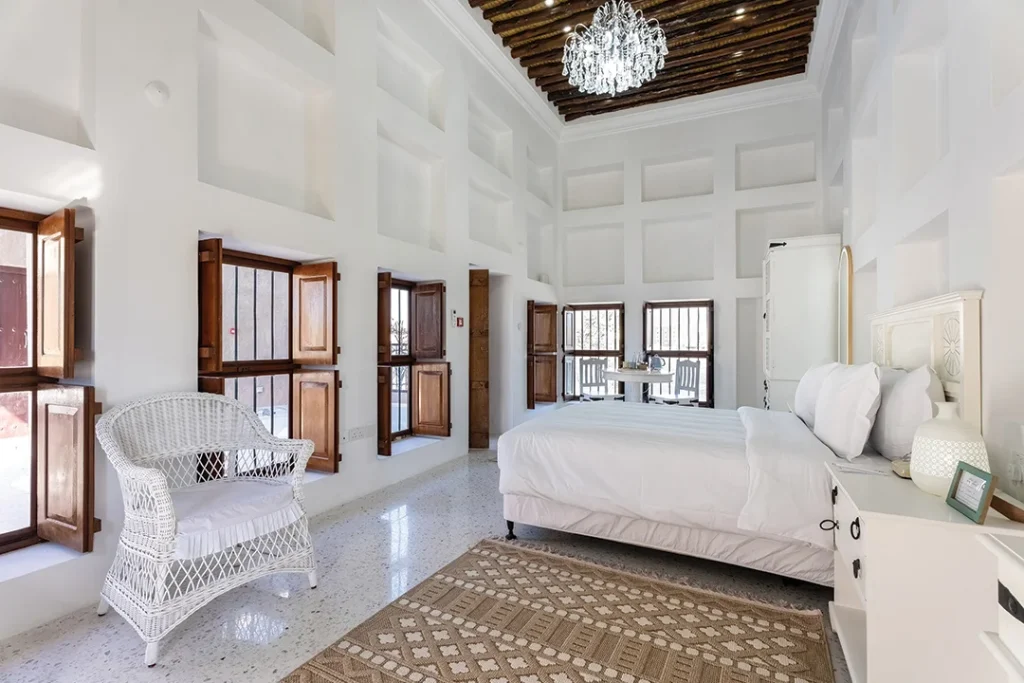
The Heritage Royal Suite occupies a privileged position within the hotel’s architectural structure, incorporating traditional design elements that would be impossible to replicate in a contemporary building. The suite features a traditional barjeel wind tower that provides natural ventilation and creates unique atmospheric qualities as air moves through the space. Original architectural details including carved wooden screens, traditional plasterwork, and authentic flooring materials create an environment that feels historically rooted rather than decoratively themed. Conde Nast Traveler specifically praised how these elements have been preserved and integrated rather than recreated or simulated, noting that this authenticity is immediately perceptible to guests.
The interior design of the Heritage Royal Suite balances heritage preservation with contemporary comfort in ways that both publications found exemplary. Traditional furnishings including handcrafted beds, authentic Sadu textiles, and traditional storage elements coexist with modern amenities including high-end entertainment systems, luxury bathroom fixtures, and comprehensive climate control. This integration feels natural rather than forced, with modern elements positioned to complement rather than compete with traditional features. Arabian Business noted that achieving this balance requires significant investment in custom solutions, as standard luxury hotel furnishings and equipment often clash with traditional architectural environments.
The service experience within the Heritage Royal Suite reflects the hotel’s overall philosophy while adding exclusive touches appropriate to the accommodation’s premium status. Guests in this suite enjoy private check-in procedures that incorporate traditional welcoming rituals, dedicated staff members who serve as cultural hosts as well as service providers, and customized experiences that can include private dining featuring heritage recipes, traditional music performances, and curated cultural briefings. Conde Nast Traveler highlighted how these services transform the suite from merely expensive accommodation into a comprehensive cultural experience that justifies its premium pricing.
Sustainability and Cultural Preservation as Luxury Values
Both publications recognized that Arabian Boutique Hotel has successfully positioned sustainability and cultural preservation not as corporate social responsibility initiatives but as integral components of its luxury proposition. This approach reflects evolving luxury values, particularly among affluent travelers who increasingly expect high-end experiences to demonstrate environmental and cultural consciousness. The hotel’s commitment to these principles in authentic rather than performative ways contributed significantly to its favorable coverage.
The property’s environmental sustainability initiatives received substantial attention from both publications. The traditional barjeel wind towers, beyond their cultural significance, genuinely reduce energy consumption for cooling. The hotel has implemented water conservation measures appropriate to its desert context, including traditional landscaping with native plants that require minimal irrigation. Waste reduction programs, locally sourced materials, and energy-efficient systems demonstrate comprehensive environmental commitment. Arabian Business specifically noted that these initiatives align with the UAE’s broader sustainability goals, positioning the hotel favorably with both government stakeholders and environmentally conscious travelers.
Cultural preservation efforts at Arabian Boutique Hotel extend beyond the property’s physical environment to encompass active support for traditional crafts, arts, and practices. The hotel maintains relationships with traditional artisans, providing them with income opportunities and visibility that help sustain endangered skills. Cultural programming including exhibitions, demonstrations, and educational sessions helps guests understand the significance of traditional practices while creating economic incentives for their continuation. Conde Nast Traveler highlighted specific examples including the hotel’s partnership with Sadu weaving cooperatives and its support for traditional dhow builders, noting that these initiatives create meaningful connections between guests and living cultural traditions.
The hotel’s approach to cultural preservation also encompasses intangible heritage including traditional music, storytelling, and hospitality customs. Rather than presenting these elements as static museum pieces, the hotel integrates them into living experiences that evolve while maintaining connection to their origins. Traditional music performances accompany dining experiences, storytelling sessions share local legends and histories, and hospitality customs are practiced as genuine expressions of welcome rather than theatrical performances. Both publications noted that this approach respects the dynamism of cultural traditions while ensuring their transmission to new generations, including both local youth and international visitors.
Media Strategy and Thought Leadership in Heritage Hospitality
Beyond the tangible qualities that earned Arabian Boutique Hotel its international recognition, both publications implicitly acknowledged the sophistication of the hotel’s media and positioning strategy. Securing coverage in Conde Nast Traveler and Arabian Business requires more than having an excellent property—it requires understanding what these publications value and presenting the hotel’s story in ways that align with their editorial priorities. The hotel’s success in this regard reflects thoughtful strategic thinking about brand positioning and media relations.
The hotel’s approach to media relations differs significantly from typical luxury hotel PR strategies. Rather than blanketing travel media with press releases and hosting generic journalist familiarization trips, Arabian Boutique Hotel has cultivated relationships with specific journalists and editors who demonstrate genuine interest in cultural heritage and authentic travel experiences. This targeted approach has resulted in coverage that is more substantive and better aligned with the hotel’s actual strengths than the superficial mentions that often result from broad PR campaigns. Arabian Business noted that this strategy requires patience and confidence in the property’s inherent appeal, as it means accepting that some high-profile outlets may never provide coverage because their editorial focus doesn’t align with the hotel’s authentic story.
The hotel has also positioned itself as a thought leader in heritage hospitality, contributing to industry conversations about cultural authenticity, sustainable tourism, and the evolution of luxury in the Middle East. This thought leadership manifests through participation in industry conferences, publication of articles and white papers, and engagement with academic institutions studying tourism and cultural preservation. Conde Nast Traveler’s coverage reflected awareness of this broader industry role, positioning the hotel not merely as an excellent property but as a pioneer in an emerging category of hospitality that may influence the broader industry.
The digital content strategy employed by Arabian Boutique Hotel complements its traditional media efforts by creating an authentic online presence that extends the property’s narrative beyond what print publications can convey. Rather than polished marketing content, the hotel’s digital platforms feature genuine stories about cultural traditions, behind-the-scenes glimpses of traditional craft processes, and educational content about Emirati heritage. This approach has built an engaged online community that amplifies the hotel’s recognition when major publications feature the property. Both publications noted the synergy between the hotel’s digital presence and its physical experience, recognizing that this consistency reinforces authenticity perceptions.
Guest Testimonials and Experiential Validation
While editorial recognition from prestigious publications provides valuable third-party validation, both Conde Nast Traveler and Arabian Business ultimately assess properties based on actual guest experiences. The coverage of Arabian Boutique Hotel in both publications drew heavily from guest testimonials and the documented experiences of their own reviewers, recognizing that consistent positive guest feedback represents the most reliable indicator of a property’s quality.
The guest testimonials featured in both publications revealed consistent themes that aligned with the hotel’s intended positioning. Guests repeatedly emphasized feeling genuinely welcomed rather than merely processed, experiencing cultural authenticity rather than themed decoration, and discovering aspects of Emirati culture that they had not encountered at other Dubai properties. These testimonials were particularly powerful because they came from diverse traveler demographics including luxury travel connoisseurs, business executives, and cultural enthusiasts, suggesting that the hotel’s appeal extends beyond niche markets.
Conde Nast Traveler’s own reviewers provided detailed accounts of their experiences that validated the hotel’s claims about cultural authenticity and service quality. Their coverage described specific interactions with staff members, particular dishes that impressed them, and moments of genuine cultural connection that distinguished the stay from typical luxury hotel experiences. This level of detail signals to readers that the coverage represents genuine assessment rather than recycled press materials, increasing its credibility and influence.
Arabian Business supplemented guest testimonials with analytical data about guest satisfaction metrics, repeat visitation rates, and competitive positioning. Their coverage noted that Arabian Boutique Hotel achieves guest satisfaction scores that consistently exceed luxury hotel segment averages, with particularly high ratings for cultural experience quality and staff authenticity. The publication also noted that the hotel has achieved notable success with repeat guests, suggesting that the experience delivers lasting value rather than momentary novelty. This data-driven validation complemented the more experiential coverage in Conde Nast Traveler, providing readers with both emotional and rational reasons to consider the property.
The Broader Implications for Dubai’s Hospitality Landscape
Both publications positioned Arabian Boutique Hotel’s recognition within the broader context of Dubai’s evolving tourism strategy. As the emirate seeks to diversify its tourism offerings and attract higher-spending, longer-staying visitors, properties that offer authentic cultural experiences become strategically important. The success of Arabian Boutique Hotel demonstrates that there is genuine market demand for alternatives to conventional luxury tourism, encouraging other developers to consider similar approaches.
Conde Nast Traveler framed the hotel’s recognition as evidence that Dubai’s hospitality scene is maturing beyond its initial focus on superlatives and spectacle. The publication suggested that Arabian Boutique Hotel represents a new generation of Dubai properties that prioritize meaningful experiences over impressive statistics, authentic culture over imported luxury, and lasting memories over Instagram moments. This evolution, according to the publication, positions Dubai to compete more effectively with established cultural tourism destinations while maintaining its distinctive character as a meeting point of traditional and modern.
Arabian Business analyzed the hotel’s success from an economic development perspective, noting that properties like Arabian Boutique Hotel contribute to tourism sector diversification and resilience. By attracting different visitor segments and extending average stays through cultural programming, such properties reduce dependence on volume-driven tourism models that can be vulnerable to external shocks. The publication also noted that the hotel’s support for traditional crafts and local suppliers creates economic multiplier effects that benefit the broader community, aligning with government economic diversification objectives.
The recognition of Arabian Boutique Hotel also carries symbolic significance within Dubai’s ongoing dialogue about identity and development. The property demonstrates that Emirati heritage can serve as the foundation for world-class luxury experiences rather than being preserved separately from contemporary life. This integration of tradition and modernity within a commercial success story provides a model for how Dubai can continue developing while maintaining cultural continuity. Both publications suggested that this symbolic value may be as important as the direct economic benefits in explaining why the hotel has received such prominent recognition.
Conclusion: Authenticity as the Ultimate Luxury
The recognition of Arabian Boutique Hotel by Conde Nast Traveler and Arabian Business ultimately reflects a fundamental shift in how luxury is defined and valued in contemporary travel. In an era when material luxury has become increasingly accessible and standardized, authenticity has emerged as the scarcest and most valued commodity. Arabian Boutique Hotel has succeeded by recognizing this shift and building every aspect of its operation around delivering genuine cultural experiences rather than simulated ones.
The property’s journey from concept to international recognition demonstrates that authenticity cannot be manufactured through decoration or marketing—it must be embedded in fundamental decisions about architecture, service philosophy, culinary programming, and community relationships. The investments required to achieve this authenticity, from heritage architectural techniques to comprehensive cultural training for staff, are substantial but ultimately create sustainable competitive advantages that cannot be easily replicated by competitors.
For travelers seeking meaningful luxury experiences in Dubai, Arabian Boutique Hotel’s recognition by these prestigious publications provides confidence that the property delivers on its promises. For the broader hospitality industry, the hotel’s success offers valuable lessons about evolving luxury values and the commercial potential of cultural authenticity. And for Dubai itself, the property represents an important step in the emirate’s ongoing evolution from a destination known primarily for spectacle to one recognized for substance.
The features in Conde Nast Traveler and Arabian Business are not merely marketing achievements for Arabian Boutique Hotel—they are validations of a vision that dares to suggest that the deepest luxury lies in genuine human connection to place, culture, and tradition. In a city that has built its reputation on exceeding expectations, this hotel’s greatest achievement may be demonstrating that sometimes the most extraordinary experience is simply an authentic one.